Simple Steps That Help Protect Your Home, Your Appliance, and Your Back
To safely move a heavy appliance without damage, plan the path first, gather the right tools, protect the floors and walls, and move slowly with help. Most damage happens from poor lifting, tight corners, loose parts, or rushing. If the appliance is very large, built in, or hard to disconnect, using an appliance moving service is often the safer choice.
What You Need Before Starting
Before you move anything, get your supplies ready. This saves time and helps prevent dents, scratches, and injury. Heavy items like washers, dryers, fridges, and stoves can shift fast if they are not secured well. A few simple tools can make the job much safer.
- work gloves for better grip
- moving straps or a lifting harness
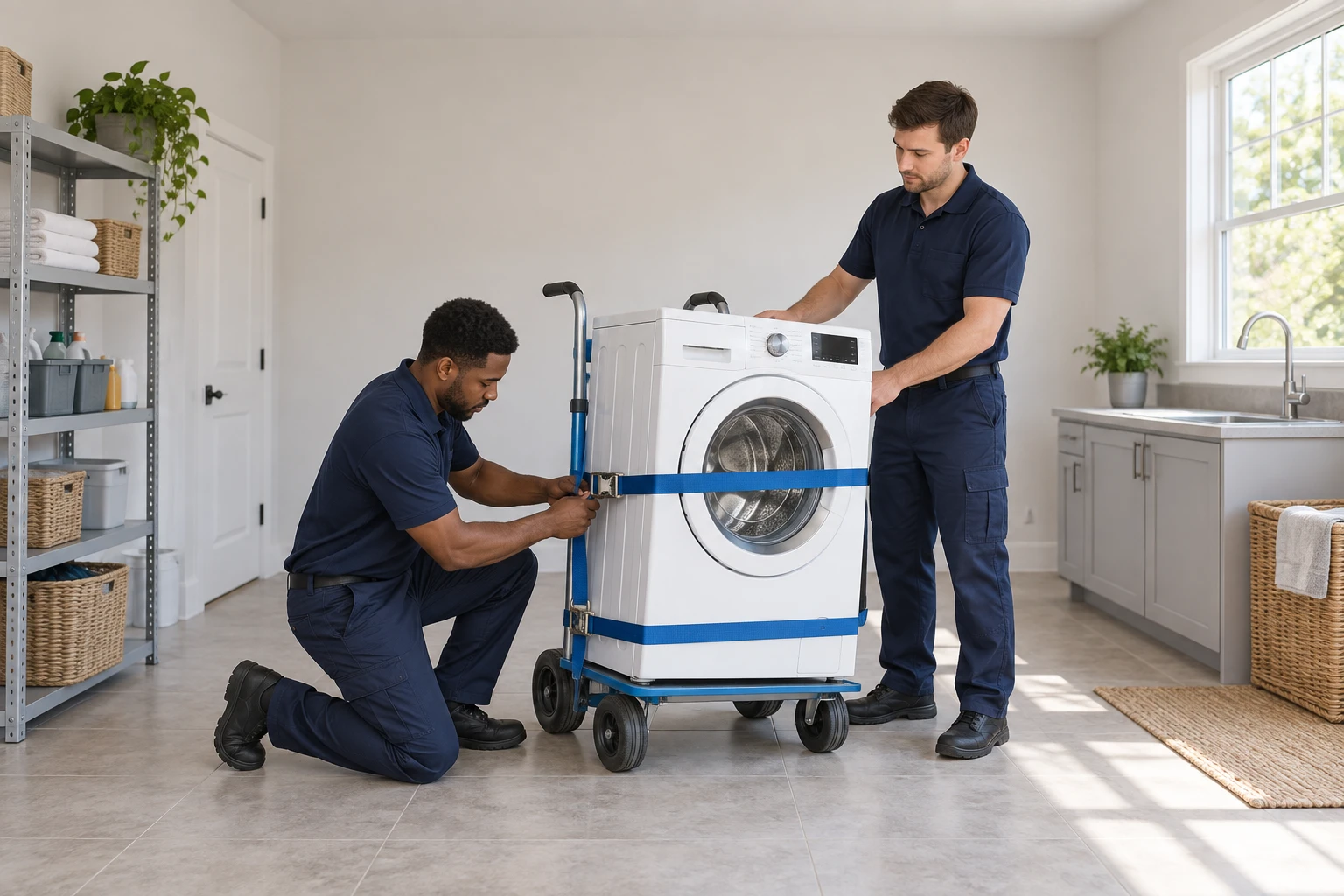
- an appliance dolly
- furniture sliders or thick cardboard
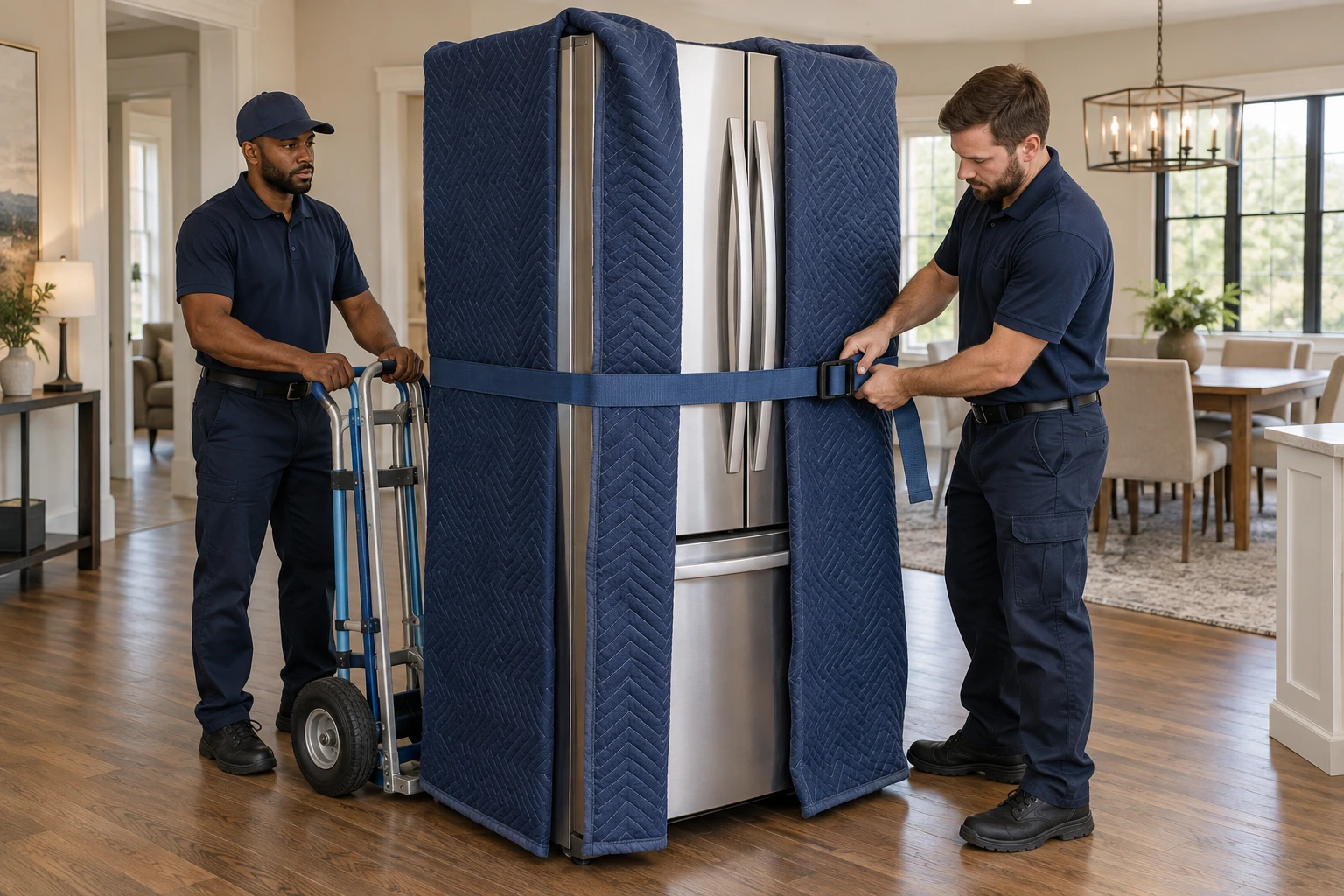
- moving blankets
- tape for cords and doors
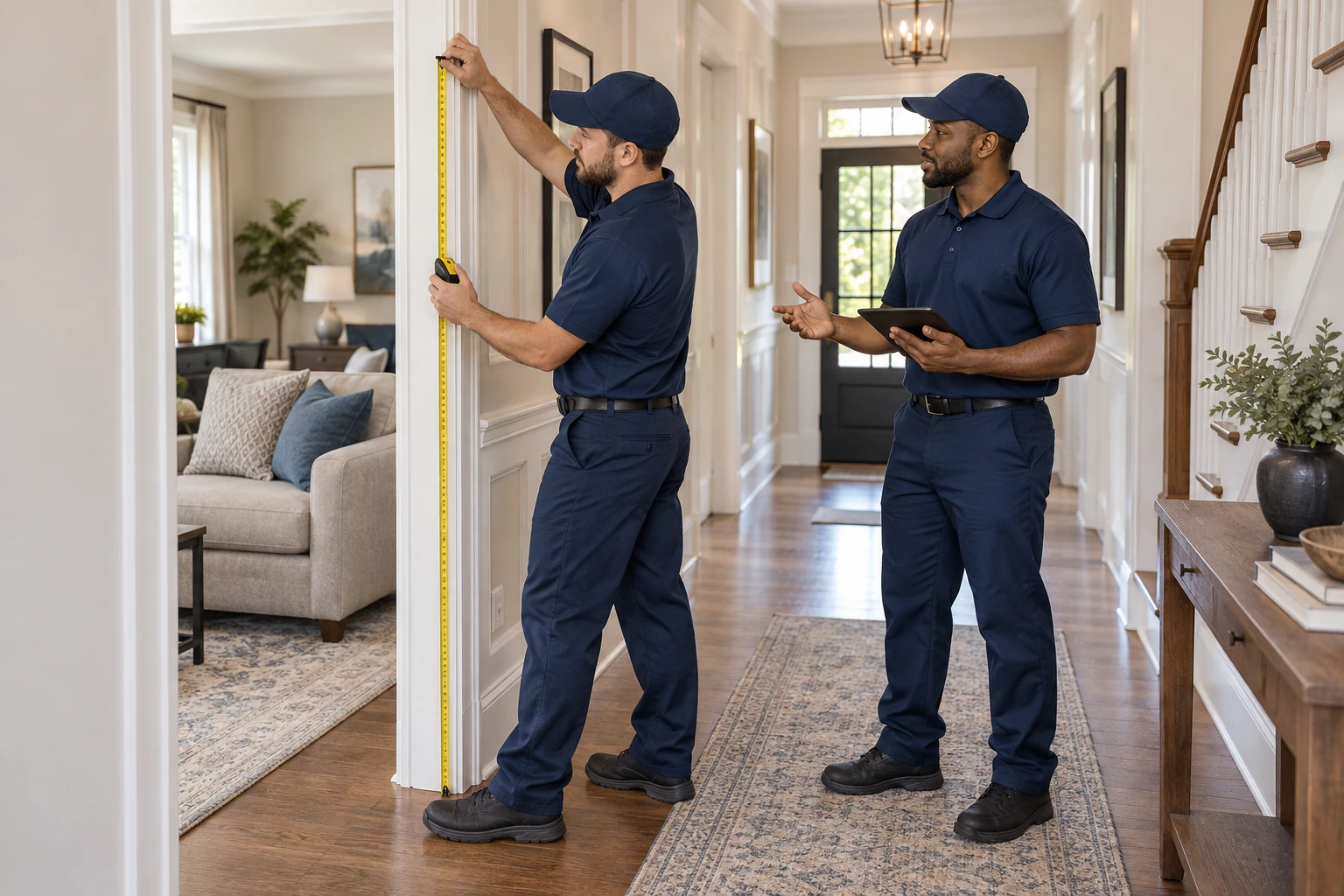
- measuring tape for doorways and halls
- helper or team support
You should also empty the appliance before moving it. Remove shelves, drawers, trays, and loose parts. Tape doors shut if needed. Unplug the unit and clean up any water, ice, or grease. If you are moving a washer, disconnect the water lines and drain them. If you are moving a gas dryer or gas stove, stop and call a trained pro.
Step-by-Step Process
A careful plan is the best way to avoid damage. This is true whether you move the item across one room or into a truck. Follow each step in order and do not rush.
- Measure the appliance, doors, halls, and stair space.
- Clear the full path of rugs, toys, cords, and small furniture.
- Protect floors with sliders, cardboard, or blankets.
- Remove loose parts and tape down cords and doors.
- Tip the appliance only as much as needed.
- Slide it forward and place it onto an appliance dolly.
- Strap it tightly to the dolly so it cannot shift.
- Keep the appliance upright when possible.
- Move slowly through corners and over thresholds.
- Set it down gently and check for level placement.
For a refrigerator, keeping it upright matters a lot. Laying it flat can cause oil to move into the cooling lines. If it must tilt, keep the angle low and let it rest upright before plugging it back in. For washers, many models need shipping bolts before transport. Check the owner’s manual if you still have it.
Common Mistakes to Avoid
Many people damage appliances by doing small things wrong. A rushed move can scratch hardwood, crack tile, dent walls, or harm the machine itself. It can also lead to back strain or crushed fingers.
- lifting with your back instead of your legs
- moving alone when the appliance is too heavy
- forgetting to measure narrow spaces
- dragging the unit across bare floors
- not securing doors, cords, or shelves
- tilting a fridge too far
- using the wrong dolly or weak straps
- trying to disconnect gas lines without training
Another common problem is not protecting the home. A heavy corner can chip paint, snap trim, or punch into drywall. Use blankets on sharp edges and have one person guide from the front. Good communication helps every move go smoother.
When to Call a Professional
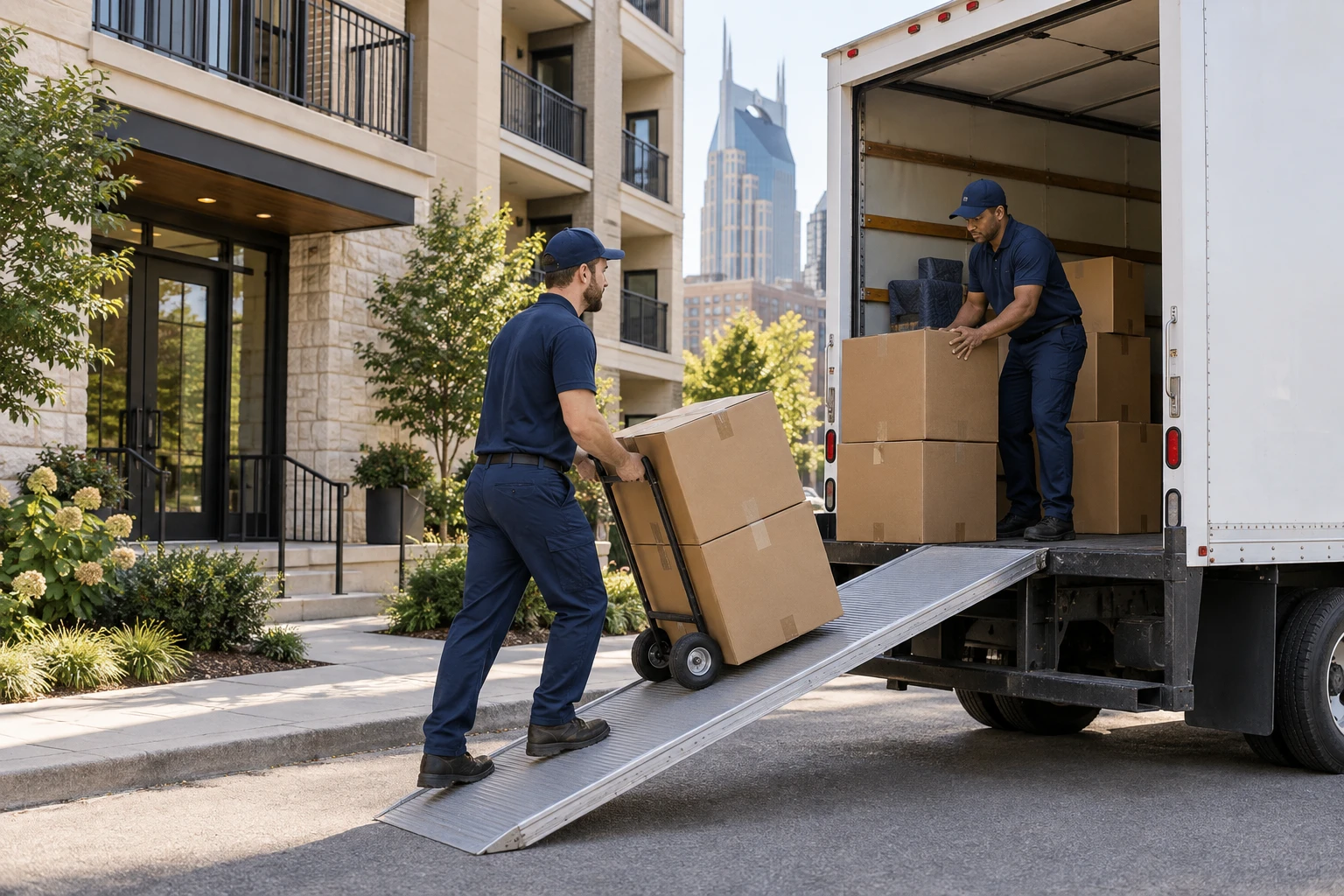
Some moves are better left to a trained crew. If the appliance is built in, extra wide, very old, or going down stairs, the risk goes up fast. A professional appliance moving service has the tools and team support needed for tougher jobs. They also know how to handle tight spaces, loading ramps, and fragile flooring.
You may also want help if the appliance needs disconnection or reconnection. Washers, ice makers, and gas units can be tricky. A mistake can lead to leaks, dents, or poor performance later. When choosing an appliance moving service, it can help to ask whether the company also handles setup and placement after the move.
In homes around Nashville, TN, another good time to get help is during a full move, remodel, or floor replacement project. Large appliances often need to be moved out, stored with care, and brought back in without harming new surfaces. That is where an appliance moving service can save time and stress.
Final Recommendation
If you plan ahead, use the right tools, and move at a steady pace, you can lower the chance of damage. Some small appliances are manageable with help from a friend, but larger units need more care. For safer results in Nashville, TN, contact us at (615) 600-2989. At Tennessee Moving Service, we can help with appliance moving service needs and give you a clear next step for your move.