Simple Ways to Get Big Items Through Small Areas Safely
To move large items through small doorways, halls, and stairs, start by measuring everything first. Then clear the path, remove loose parts, and use the right angle for each piece. Slow moves work better than fast ones. In many cases, a sofa, dresser, or table will fit once you turn it, lift one side, or take it apart. Good furniture moving starts with planning, not force.
What You Need Before Starting
Before you move anything large, gather a few basic tools and supplies. This saves time and helps prevent damage to walls, floors, and the item itself. Even a simple move across one room can go wrong if you skip the setup. If your job involves furniture moving in an apartment, older home, or tight stairwell, these steps matter even more.
- Tape measure
- Work gloves
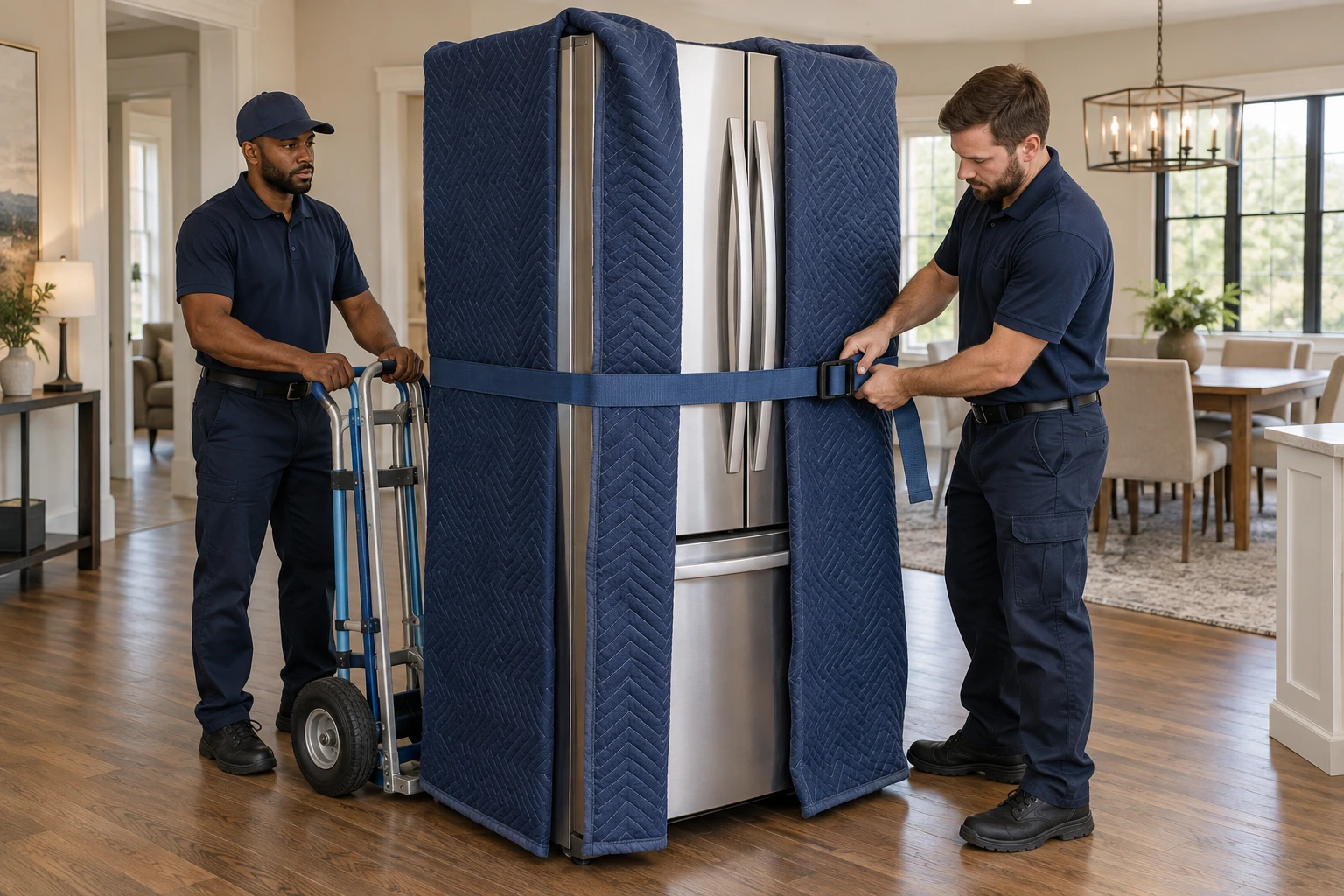
- Moving blankets
- Furniture sliders
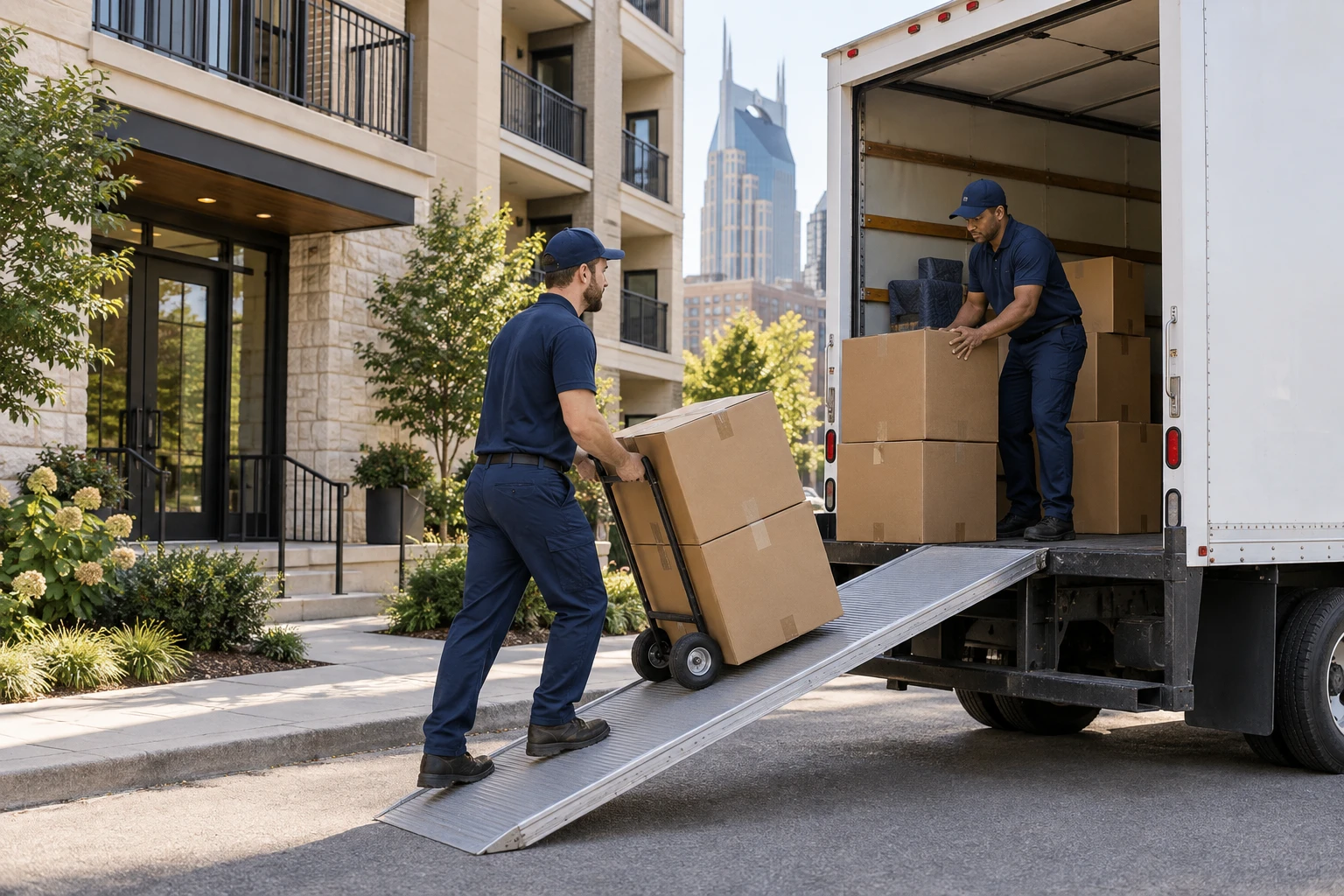
- Dolly or hand truck
- Screwdriver or drill for removing parts
- Painters tape for marking tight spots
- A helper for balance and safety
Careful preparation is part of the full moving job. Good prep can turn a hard move into a smooth one.
Step-by-Step Process for Tight Spaces
The best way to handle tight spaces is to break the job into small steps. Do not guess. Measure, plan, and move with care.
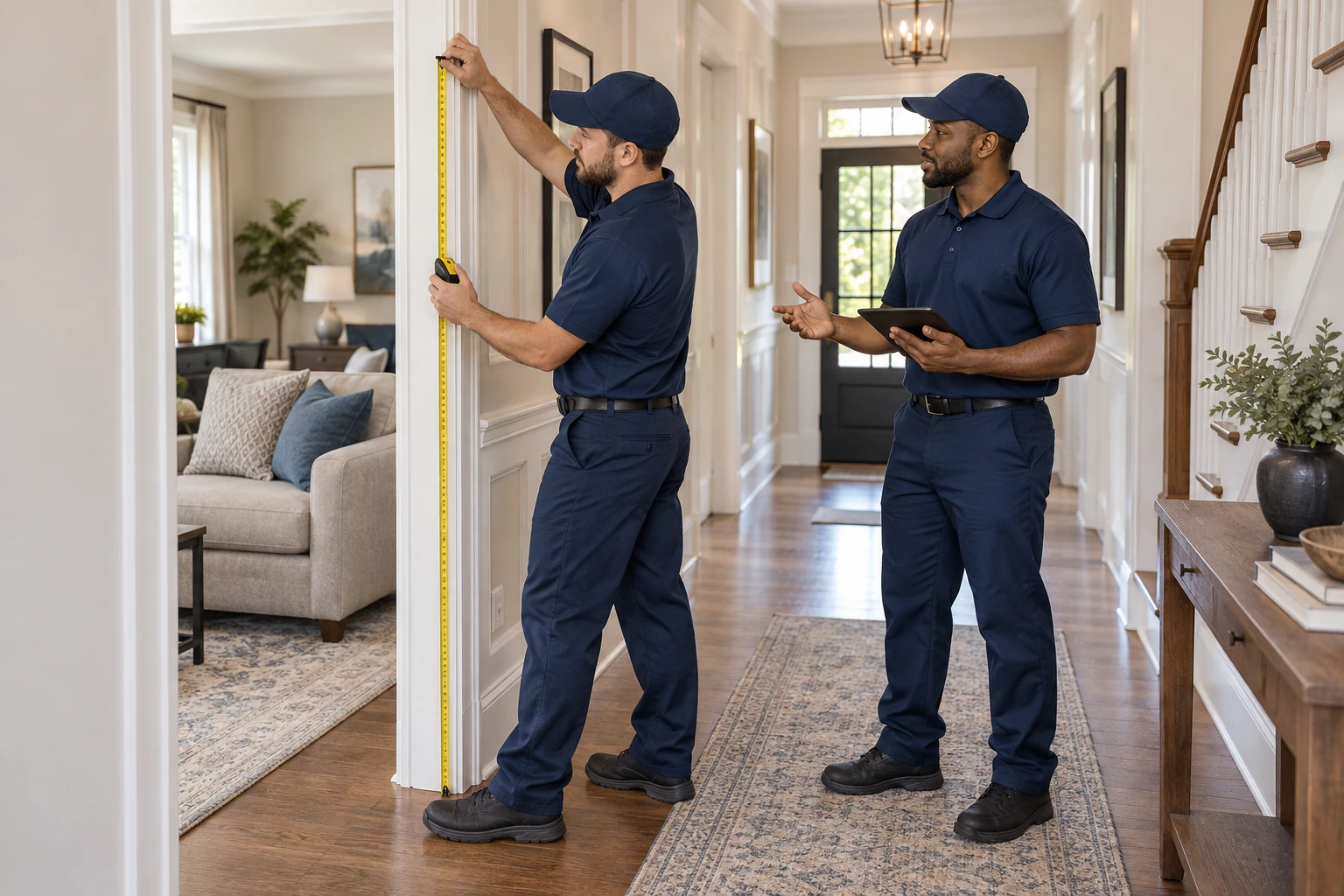
- Measure the furniture. Check height, width, and depth.
- Measure the doorway, hallway, stairwell, and ceiling height.
- Compare both sets of numbers before lifting anything.
- Remove cushions, legs, shelves, drawers, or doors if possible.
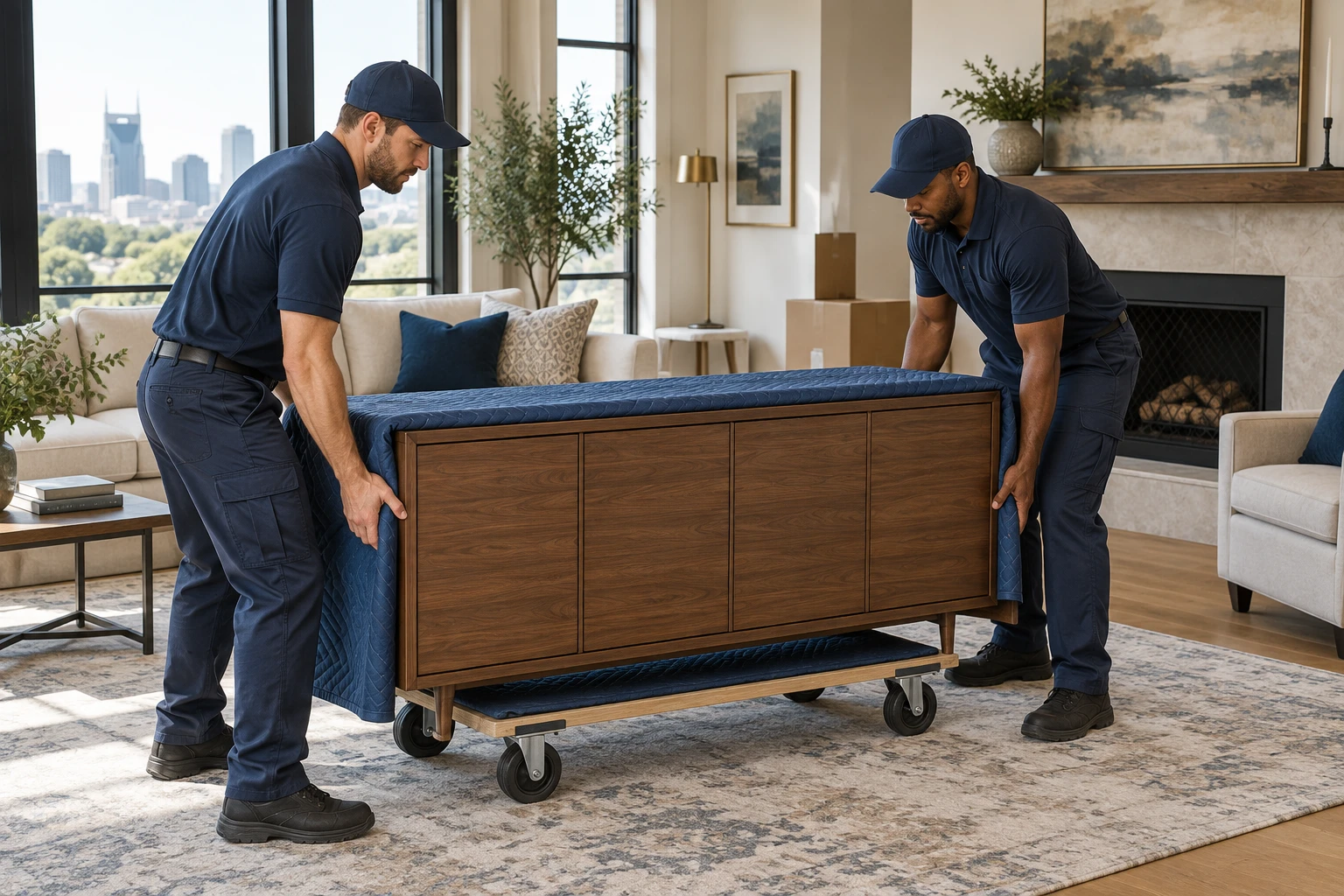
- Pad sharp corners with blankets to protect the item and walls.
- Clear rugs, shoes, cords, and small tables from the path.
- Test angles slowly. Try standing the piece on its end or side.
- Lift with your legs and keep the weight close to your body.
- Move one step at a time and talk with your helper often.
- Stop if it gets stuck. Reset and try a new angle.
A common example is a couch that will not fit through a front door flat. Many times, it will fit if you stand it upright, tilt the back inward, and rotate it slowly. A large dresser may need drawers removed first to make it lighter and easier to control. In furniture moving, small changes often make the biggest difference.
Common Mistakes to Avoid
Many people damage furniture because they rush. Tight spaces need patience. A few simple mistakes can lead to scratched floors, dented walls, or strained backs.
- Skipping measurements and guessing
- Trying to move heavy items alone
- Pushing harder when the item gets stuck
- Forgetting to remove legs or drawers
- Using the wrong dolly for stairs
- Leaving obstacles in the walkway
- Not protecting corners and railings
Another mistake is forcing a piece that really needs partial disassembly. Bed frames, sectionals, and dining tables often come apart faster than people think. Taking five extra minutes to remove hardware can save much more time later.
When a Professional Move Makes More Sense
Some jobs are just too risky for a do-it-yourself move. If the item is very heavy, very valuable, or hard to replace, expert help may be the safer option. This is true for pianos, solid wood armoires, stone-top tables, and oversized sectionals. A narrow staircase, sharp turn, or low ceiling can add more risk.
Professional furniture moving crews often bring tools that most people do not have. That may include lifting straps, stair rollers, heavy-duty dollies, floor runners, and better padding. They also know how to spot trouble before damage happens. If you are moving in or out of Nashville, TN, older homes, small elevators, and tight apartment halls can make large-item moves extra hard.
Tips That Help in Real Homes
Real homes are rarely empty boxes. You may have wall art, narrow entries, light fixtures, kids’ toys, pets, or uneven steps. That is why it helps to do a quick home walk-through first. Open doors all the way. Remove pictures near turn points. Move lamps and plants. Tape blankets over areas that might get hit.
If you are moving upstairs, keep the heavier end lower when possible. If you are moving downstairs, go slowly and keep constant contact with the item. One person should lead the move, call out steps, and set the pace. Clear communication helps prevent sudden drops or bad turns.
For very tight corners, some movers use the hook method with sofas. This means turning the couch so it is almost upright, then easing one arm and one back corner around the frame in stages. It sounds simple, but timing and angle matter a lot. If it does not move with steady pressure, stop and rethink the position.
Final Recommendation
The safest way to manage tight spaces is to plan well, protect the area, and move slowly. Measure every opening, remove what you can from the item, and test angles before using force. Good furniture moving is less about strength and more about control. If the job feels too heavy, too awkward, or too risky, getting help can save your furniture and your home from damage.
Get Help With Hard-to-Move Items
If large items are giving you trouble in Nashville, TN, we can help with safe, careful moves. Tennessee Moving Service handles tight hallways, stair turns, and tricky doorways with the right tools and a clear plan. Call us at (615) 600-2989 to talk about your move and find the next best step.